
Last updated November 16, 2026
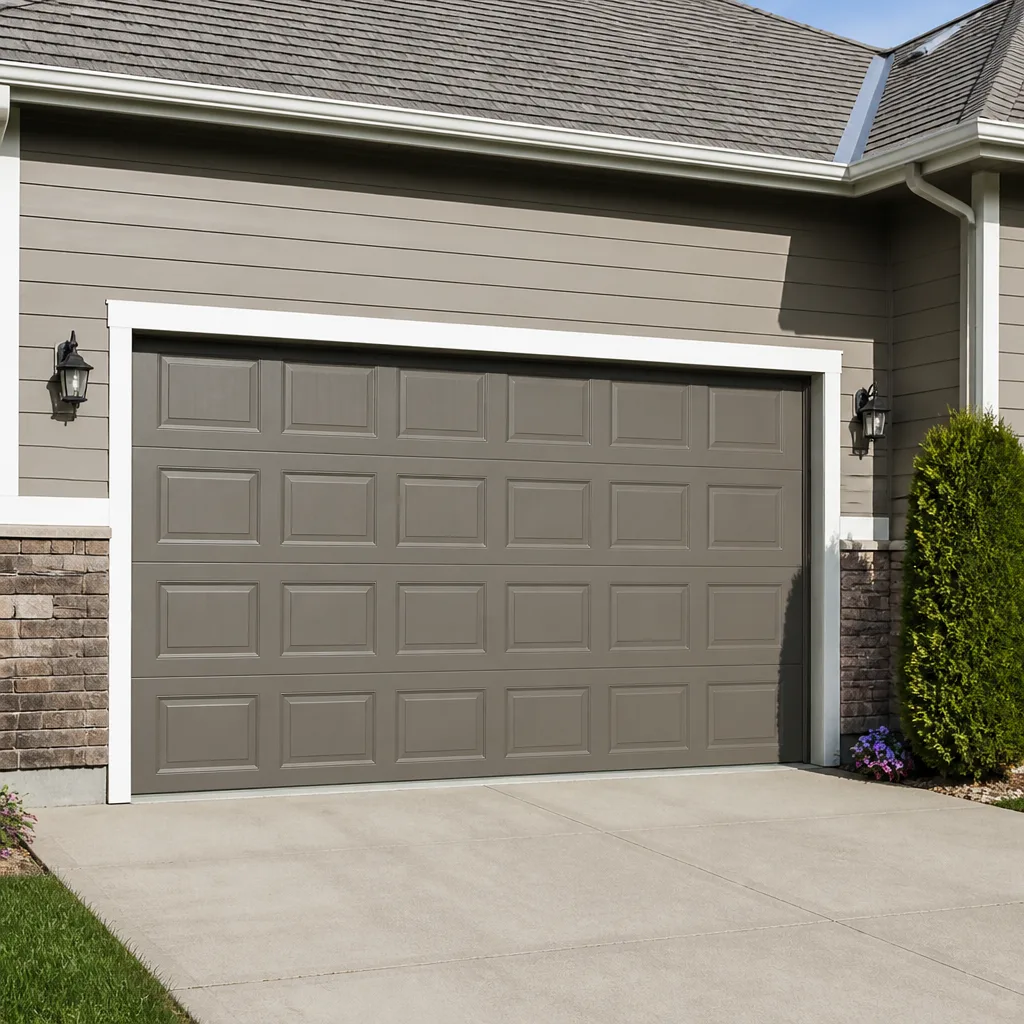 Raised-panel steel
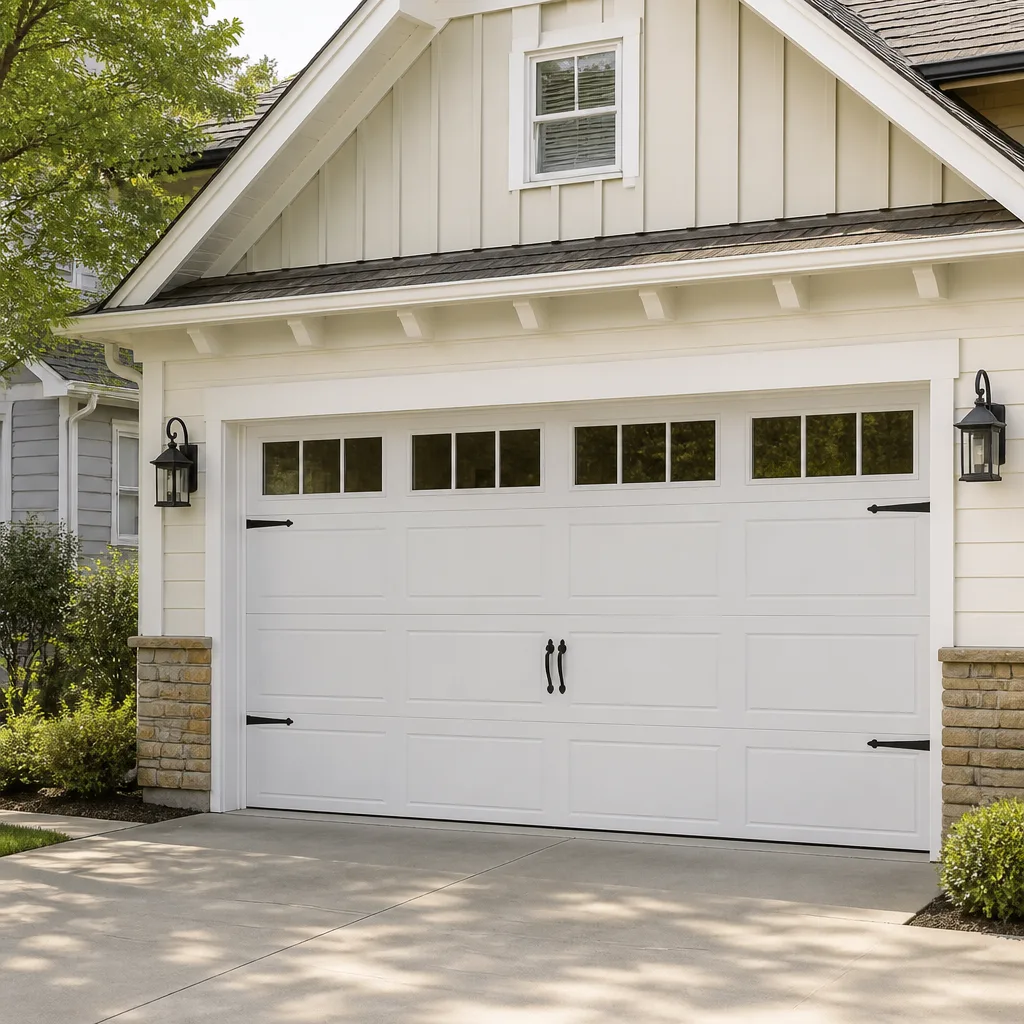
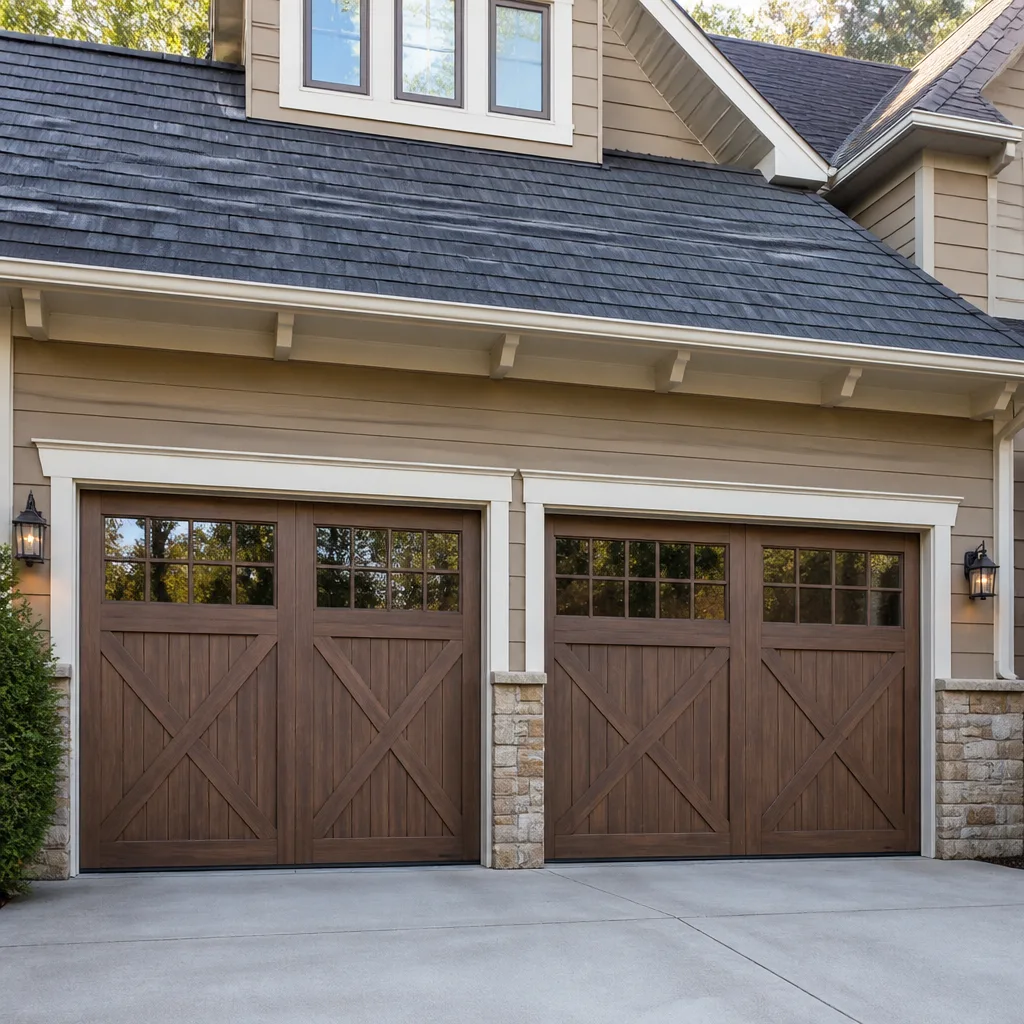 Carriage house
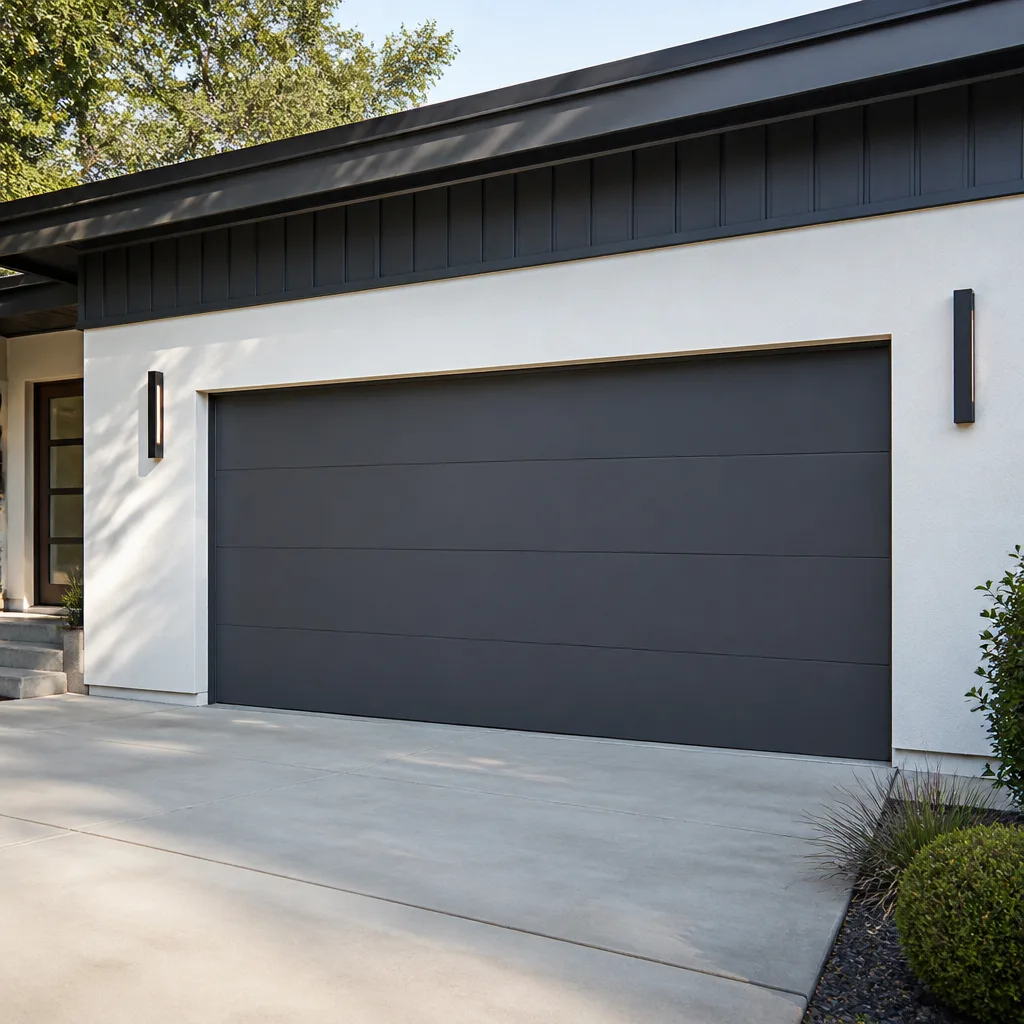 Modern flush
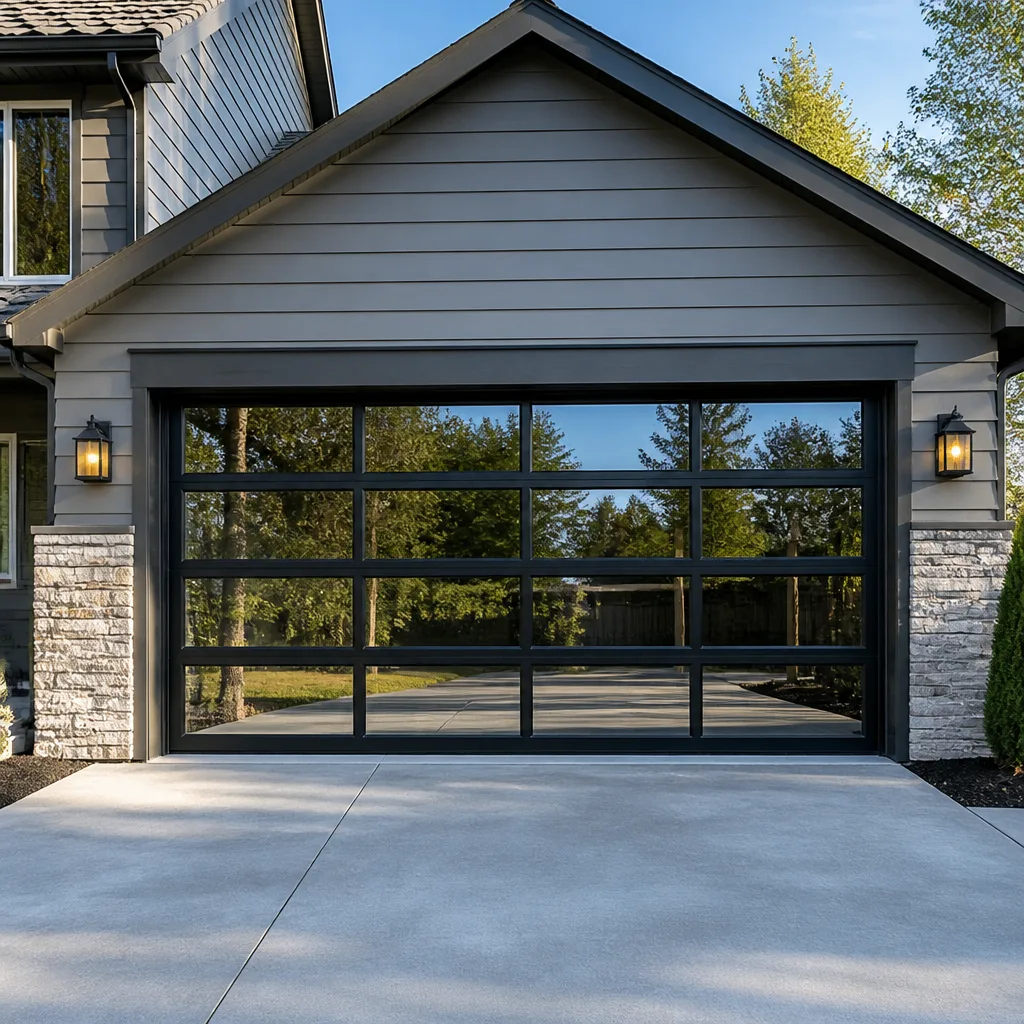 Full-view glass
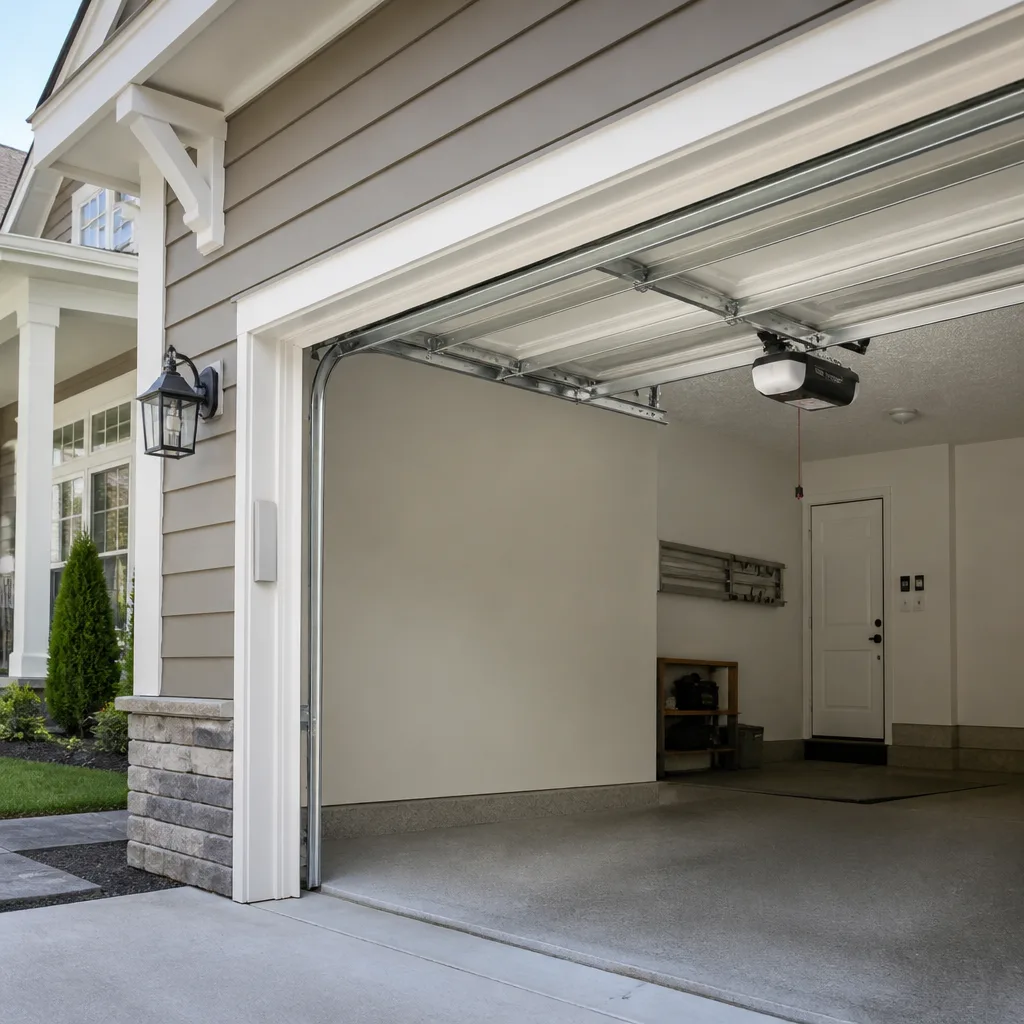 LiftMaster openers
 Chamberlain openers
Full 25-point door and opener safety check with every visit - springs, cables, rollers, tracks, and your LiftMaster or Chamberlain opener included
You get a price before we start. It does not change when the pro arrives.
Get your free estimateGarage Door Emergency Preparedness Guide for Santa Rosa Homes
Most homeowners think of their garage door as a convenience until the moment it becomes a barrier. The counterintuitive truth is that the door you use every day is also the one system in your house that can quietly lock you out of your own car, or lock your car in, exactly when you need it most. During the 2017 Tubbs Fire, some Santa Rosa residents reported being unable to open their garage doors during evacuation because of power outages – a scenario that has a simple, practiced solution most homeowners have never tested. In this guide, we’ll walk you through manual release operation, wildfire-specific prep, power outage protocols, and a 15-minute annual drill that verifies everything before you need it. Nothing here requires a technician to perform, though a few checks are worth a professional’s eye. Our goal is straightforward: for Santa Rosa homes, we want your door ready for the moment it matters.
Quick Answer
Garage door emergency preparedness in Santa Rosa means three things working together: a manual release you’ve actually tested, a backup power source matched to your opener brand, and weatherstripping that keeps embers and smoke out. If any one of those fails, a power outage or a jammed door can trap a vehicle during an evacuation or leave your home exposed to weather and debris. Test all three at least once a year, ideally before fire season and again before winter rains.
Styles & brands we work with
- Raised-panel steel
- Carriage house
- Modern flush
- Full-view glass
- LiftMaster openers
- Chamberlain openers
Table of Contents
- How Do You Use a Garage Door Manual Release?
- Wildfire Preparedness: Sealing Your Garage Door Against Embers and Smoke
- Power Outage Protocols: Backup Batteries by Opener Brand
- When a Garage Door Fails Mid-Operation and Won’t Close
- The 15-Minute Annual Garage Door Drill
- Brand-Specific Failure Patterns Worth Knowing
- What Emergency Repairs Typically Cost in Santa Rosa
- Neighborhood Notes: How Santa Rosa Geography Affects Garage Doors
How Do You Use a Garage Door Manual Release?
Every automatic garage door opener sold in the last several decades has a manual release – usually a red cord hanging from the trolley that connects the opener to the door. Pulling that cord disengages the opener so you can lift the door by hand. The catch is that most homeowners have never pulled it, don’t know how much force their door requires, and discover a seized release only when the power is already out.
Here’s what the process should look like. This is a pre-emergency test, not an emergency-time teaching moment – practice it while the power is on and the door is closed.
- Locate the red cord. It hangs from the trolley near the center of the door, above head height. Make sure it isn’t tangled or caught on anything.
- Pull straight down firmly. You’ll feel a click as the trolley disengages from the carriage. Do not yank sideways.
- Lift the door by hand. A properly balanced door should lift with modest effort – one hand, steady pressure. If it feels heavy beyond that, the springs are likely out of balance and need a technician before an emergency forces the issue.
- Lower it gently and re-engage. Close the door, then run the opener; it should reconnect automatically on the next cycle.
If the cord won’t pull or feels stuck, the trolley may be jammed, the cord may be disconnected from the release lever, or the opener carriage may be seized. Don’t force it. That’s a job for a technician with the right tools, and it’s worth scheduling before you need it during a power outage. A door that won’t release manually is a door that can trap a car.
One note for Santa Rosa homeowners in older neighborhoods with double doors: the manual release on a two-car door is the same mechanism, but the door itself is heavier. Test whether you alone can lift it. If you can’t, plan for a second person to help or talk to us about a battery backup that keeps the door operating without manual intervention.
Wildfire Preparedness: Sealing Your Garage Door Against Embers and Smoke
A garage door is the largest moving opening in most homes, and that makes it a real pathway for smoke and embers during a wildfire. Most garage doors do not close airtight. The gaps along the bottom, the sides, and the top are designed to allow clearance for movement, and every inch of that clearance is a place where a smoke plume can push in.
Here’s what to look at in Santa Rosa homes where wildfire preparedness matters:
- Bottom seal (weatherstripping). The rubber or vinyl strip that touches the ground. Look for cracking, compression, or a visible gap in daylight. A door with a tired bottom seal lets in both smoke and water – two Santa Rosa concerns in the same component.
- Perimeter weatherstripping. The brush or vinyl seal around the door’s frame. Look for gaps at the top and sides. On windy days, smoke will find any gap larger than a pencil.
- Threshold seal. A raised strip mounted to the floor that the closed door meets. If the floor itself is uneven and the bottom seal can’t reach low spots, a threshold seal builds a consistent barrier.
- Door gaps at panel joints. On sectional doors, each panel joint is a seam. Well-made doors keep those seams tight; older or warped doors often don’t.
Weatherstripping products vary by door brand. Clopay and Amarr both publish replacement weatherstripping matched to their door models, and matching the seal to the door is how you get a tight fit that doesn’t bind. A mismatched strip either leaks or drags. In our experience, most of the airflow around a Santa Rosa garage door comes from the bottom seal and threshold, not the sides, so start there.
Do not caulk a moving door closed. Some homeowners consider sealing the perimeter permanently; that traps the door against the seals, wears out the opener motor, and defeats the whole point of a garage door. Upgrade the weatherstripping instead.
Power Outage Protocols: Backup Batteries by Opener Brand
A battery backup keeps your garage door opener working during a power outage. Whether one is worth the investment depends on how much you need the car accessible during a blackout. In Santa Rosa, where wildfire-related Public Safety Power Shutoffs have become part of how residents think about wildfire season, a battery backup on the garage door opener is a reasonable investment for most homeowners with a car parked inside.
Some openers have battery backup built in; others need an add-on. Here’s a quick look at the brands we work with most:
- LiftMaster and Chamberlain. Both offer battery-backup models and accessories. Chamberlain’s well-known belt-drive and chain-drive units often include an optional backup battery that installs into the opener head.
- Genie. Many Genie models offer a battery-backup kit designed for the same opener housing, though compatibility varies by model year. Always verify the exact model before buying a kit.
- Craftsman. Older Craftsman openers frequently lack battery backup entirely. If your door is running on an older Craftsman, the honest answer may be opener replacement.
- Raynor. Raynor offers battery-backup options that integrate with their opener line; check model compatibility before ordering.
When is a battery backup worth it? Simple test: if you couldn’t lift the door by hand and you couldn’t manually release it, a battery backup is not optional. It’s your only path out of the garage during a power failure. If your door lifts easily and the manual release works, a battery backup is still a good idea for convenience and for those situations where lifting the door by hand would put someone at risk.
One safety note: replacing or adding a backup battery means working inside the opener housing near live electrical components. If you’re not comfortable with that, have a technician handle it. Wiring mistakes can cause the opener to fail, and the opener itself is not a place to learn on the job.
When a Garage Door Fails Mid-Operation and Won’t Close
A door that fails to close is a security problem and a weather problem at the same time. The interior of the garage is exposed. Wind-driven rain during a Santa Rosa winter storm finds its way in. And an open door is an open door – your home’s largest exterior opening is standing wide, signaling to anyone who drives by that something went wrong.
If your door refuses to close, work through this checklist in order:
- Check the safety sensors. The two small lenses at the bottom of the door tracks on either side should be lit and aligned. A misaligned sensor (often bumped by a bicycle or a bag of soil) prevents the door from closing. Clean the lenses and confirm the lights.
- Look for an obstruction. Anything in the door’s path triggers a reversal. Small debris, a fallen broom, or a leaf wedged in the track can cause this.
- Check the tracks. A bent track or a roller off the rail will stall the door. Do not force it past a bind – that can damage the panels or the opener.
- Try the wall control or remote. If the wall control works and the remote doesn’t, the problem is the remote battery or the receiver in the opener, not the door.
- Pull the manual release cord and close the door by hand. Once closed, secure it – don’t leave a released door standing during an emergency.
If none of that resolves it, you’re into opener diagnostics or spring, cable, or trolley problems. Those are technician territory. The garage door opener repair side of the work you can’t safely diagnose from the outside is usually the culprit if the door moves but the opener doesn’t, or the opener strains but the door stalls.
If the door won’t close because a spring or cable is broken or hanging loose, stop right here. Garage door springs and cables are under high tension and can cause serious injury. Do not attempt to raise or lower the door. Call a trained professional.
The 15-Minute Annual Garage Door Drill
Fifteen minutes once a year closes the gap between “I think my door is fine” and “I know my door will open if I need it to.” Run this drill before fire season and again before winter. It’s the single most useful preparedness step a Santa Rosa homeowner can take.
- Test the manual release (5 minutes). With the door closed and power on, pull the red cord. Lift the door by hand. Note the effort. Close it, then run the opener to re-engage.
- Test the battery backup (3 minutes). If you have one, follow your opener’s manufacturer instructions for a battery test, or check for an indicator light. Replace batteries if the unit indicates low power – don’t wait for a power outage to find out.
- Test the exterior keypad (2 minutes). The keypad is one of the most commonly failed access points on a garage door system. If it doesn’t respond, replace the batteries or the unit. A dead keypad means the only way in is through the house.
- Test the safety sensors (2 minutes). Wave a hand (or an object) across the sensor path to confirm reversal. If it doesn’t reverse, the sensor is failing and the door can cause injury or refuse to close.
- Inspect the door visually (3 minutes). Look at the springs (are they broken or unevenly tensioned?), the cables (frayed?), the rollers (cracked?), and the weatherstripping (gaps?). Flag anything that looks off.
One more step worth adding: confirm your opener manual is somewhere you can find it. Genie, Chamberlain, LiftMaster, and Craftsman all publish manuals online by model number, which makes finding it faster than digging through a drawer.
Brand-Specific Failure Patterns Worth Knowing
One of the reasons we work on the brands we do – LiftMaster, Chamberlain, Genie, Clopay, Amarr, Wayne Dalton, Craftsman, and Raynor – is that each one fails in recognizable ways. Diagnosis is faster and more accurate when the technician recognizes the system rather than guessing. Here’s what we occasionally see in Santa Rosa homes:
- LiftMaster and Chamberlain. Often the most reliable systems, but they aren’t immune. Wall-mounted control failures and remote-receiver battery aging are common culprits in “the door won’t open” calls. The opener head’s logic board occasionally fails after power surges.
- Genie. Older Genie screw-drive units show a distinctive sound at the end of the cycle when the drive nut wears. It’s an early warning that the unit needs service, not a catastrophic failure.
- Craftsman. Many Craftsman openers on Santa Rosa homes are original to the house and running well past the age where parts are easy to source. A failing Craftsman is sometimes a sign that replacement is a smarter move than another repair.
- Raynor. Raynor door hardware is often matched to Raynor openers. If a Raynor door is retrofit with a non-Raynor opener, small alignment issues can creep in over years.
- Clopay and Amarr doors. Door manufacturers rather than opener manufacturers. Their failure patterns are in the door, not the motor – springs, hinges, panel seams, and weatherstripping.
This matters for preparedness because if you know your brand and its typical failure mode, you can keep an eye on the specific parts that are more likely to give out.
What Emergency Repairs Typically Cost in Santa Rosa
Nobody likes learning the cost during an emergency. Here are typical Santa Rosa price ranges for the most common repair categories, so you can budget ahead. The written estimate you receive after we look at your door is the final word.
| Repair | Typical Range (Santa Rosa) |
|---|---|
| Torsion spring (one spring) | $180-$340 |
| Torsion springs, matched pair | $360-$680 |
| Opener repair or replacement (labor) | $150-$400, depending on opener |
| Off-track or bent-track repair | $130-$300 |
| Weatherstripping (bottom seal installed) | $120-$260 |
| Battery backup installation | $150-$300, plus parts |
| Safety sensor replacement | $100-$200 |
A matched pair is replaced together on most doors – one spring at the end of its life means the other one is the same age. We won’t quote a single-spring price as a pair price. And the price is quoted and agreed before any work starts, so the number in the estimate is the number on the invoice.
Emergency calls get the same pricing as scheduled repairs. There’s no premium for solving a problem on a Sunday or a rainy night. Call Signal Garage Door Repair at (844) 834-1851 for a free estimate, and we’ll quote before we turn a wrench.
Neighborhood Notes: How Santa Rosa Geography Affects Garage Doors
Santa Rosa stretches from the flatlands near Coffey Park and the Junior College neighborhood out to the hills above Rincon Valley and up toward Fountaingrove and Larkfield. That geography has a real effect on how garage doors age and what they need.
- Coilex-Coffey Park and Fountaingrove. Rebuilt after the 2017 fires, many homes here have newer doors with modern openers. The preparedness priority is less about aging parts and more about verifying manual release and battery backup on doors that rarely get used. Test them.
- Rincon Valley and Bennet Valley. More mature neighborhoods with older doors and Craftsman or Genie openers that predate battery-backup standards. Homeowners here should seriously consider replacing an old opener rather than relying on manual release alone.
- Larkfield-Wikiup. Homes set on hillsides where wind exposure during smoke events is higher. Perimeter weatherstripping and a well-sealed bottom seal matter more here.
- Downtown and the Junior College area. Older homes with narrower single-car garages, where after-market opener installation sometimes means less clearance for the door above. Manual release cords need clearance to pull correctly.
- Roseland and southwest Santa Rosa. Mixed-age housing stock, so door and opener ages vary widely. The 15-minute annual drill is the right starting point before you call anyone.
None of this changes the fundamentals. It just tells you where to look first.
Common Mistakes to Avoid
- Never pulling the manual release until you need it. A seized cord is worse than no cord. Test it once a year – the middle of an evacuation is not the time.
- Relying on the opener without a backup. A Santa Rosa wildfire PSPS event can leave your door stuck. If you can’t lift the door by hand, a battery backup isn’t optional.
- Ignoring weatherstripping. A cracked bottom seal lets smoke, water, and debris in. Replace it before fire season and before the winter rains, not after.
- Forcing a stuck door. Springs and cables are under high tension. Pulling the door past a bind can release that tension dangerously.
- Skipping the annual sensor test. A safety sensor that stops working is a door that won’t close and a door that can injure someone standing nearby.
- Assuming all openers work the same. Chamberlain, Genie, LiftMaster, and Craftsman openers have different parts, different failure points, and different backup battery options. Brand matters.
- Waiting for the emergency to schedule service. The best time to address a worn opener or a sagging door is before fire season – not during.
See the difference
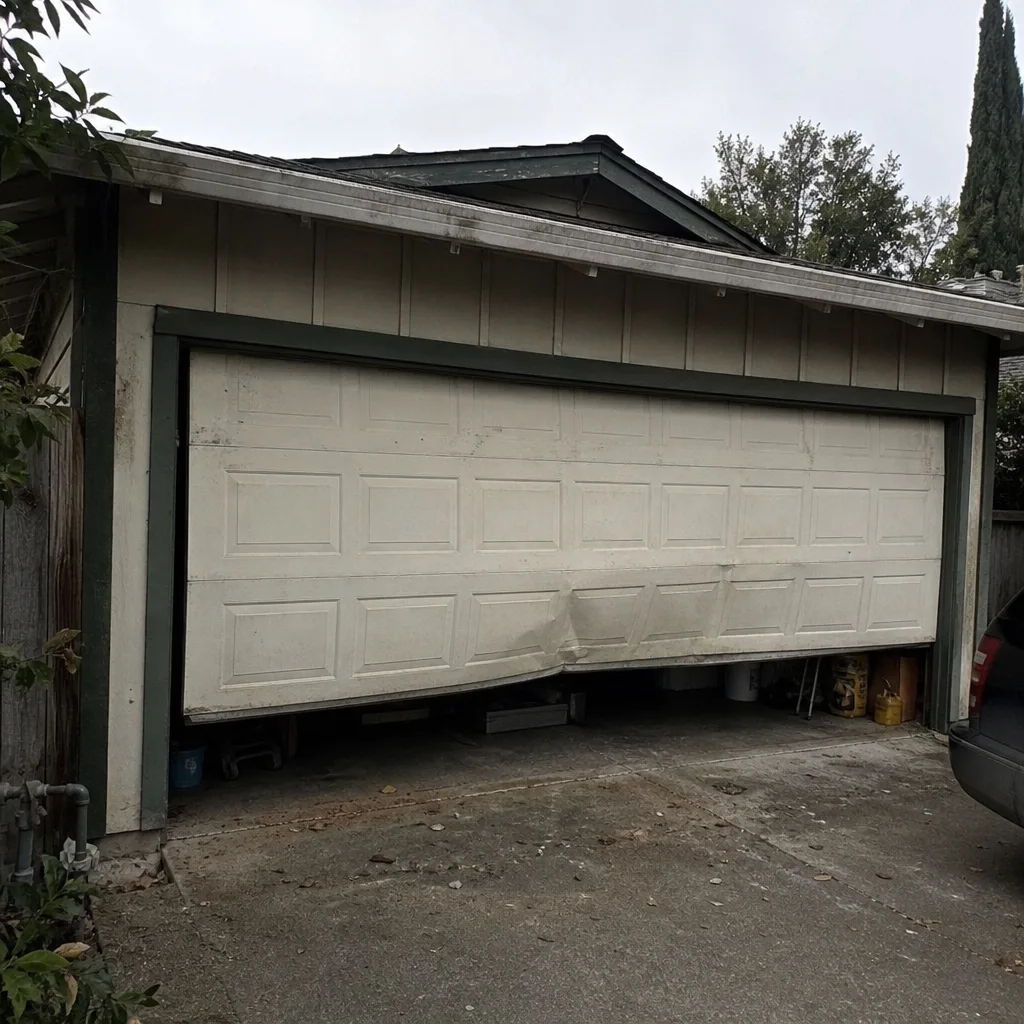 Before
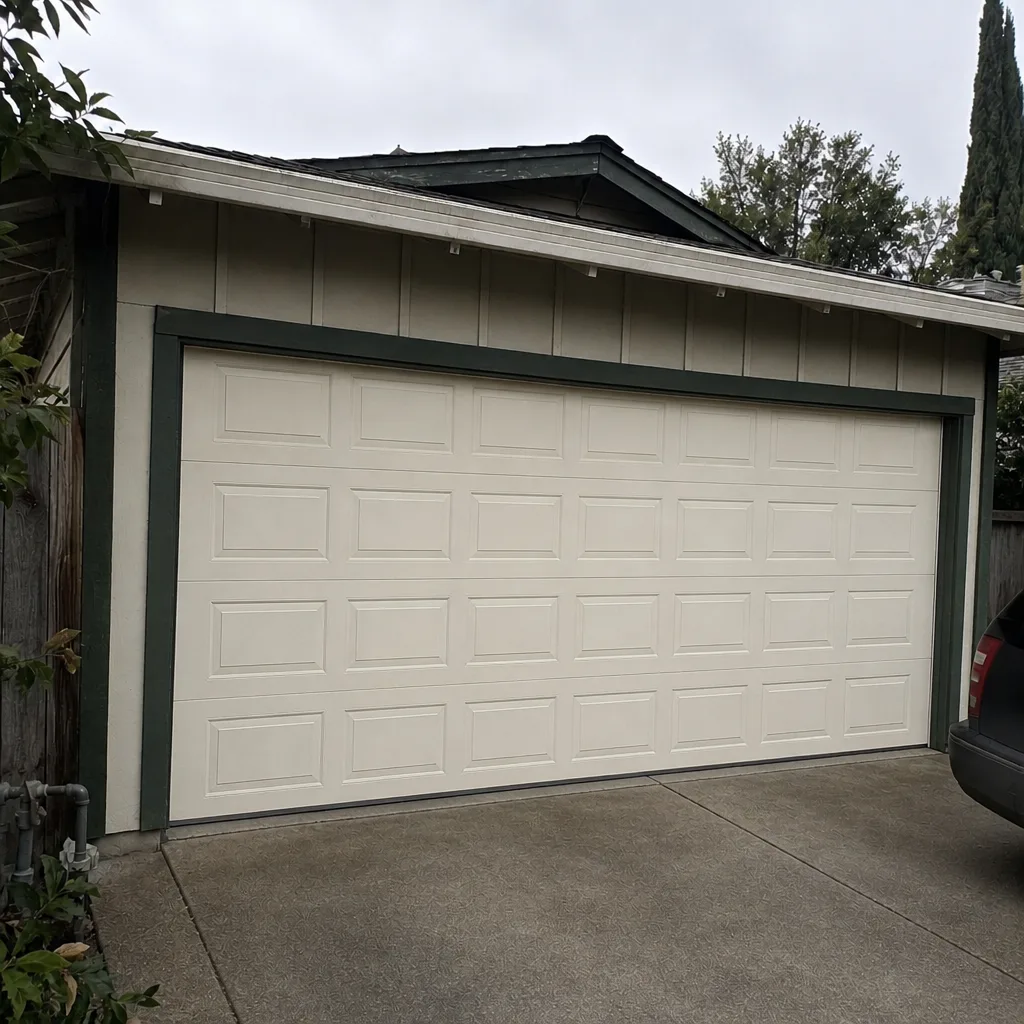 After
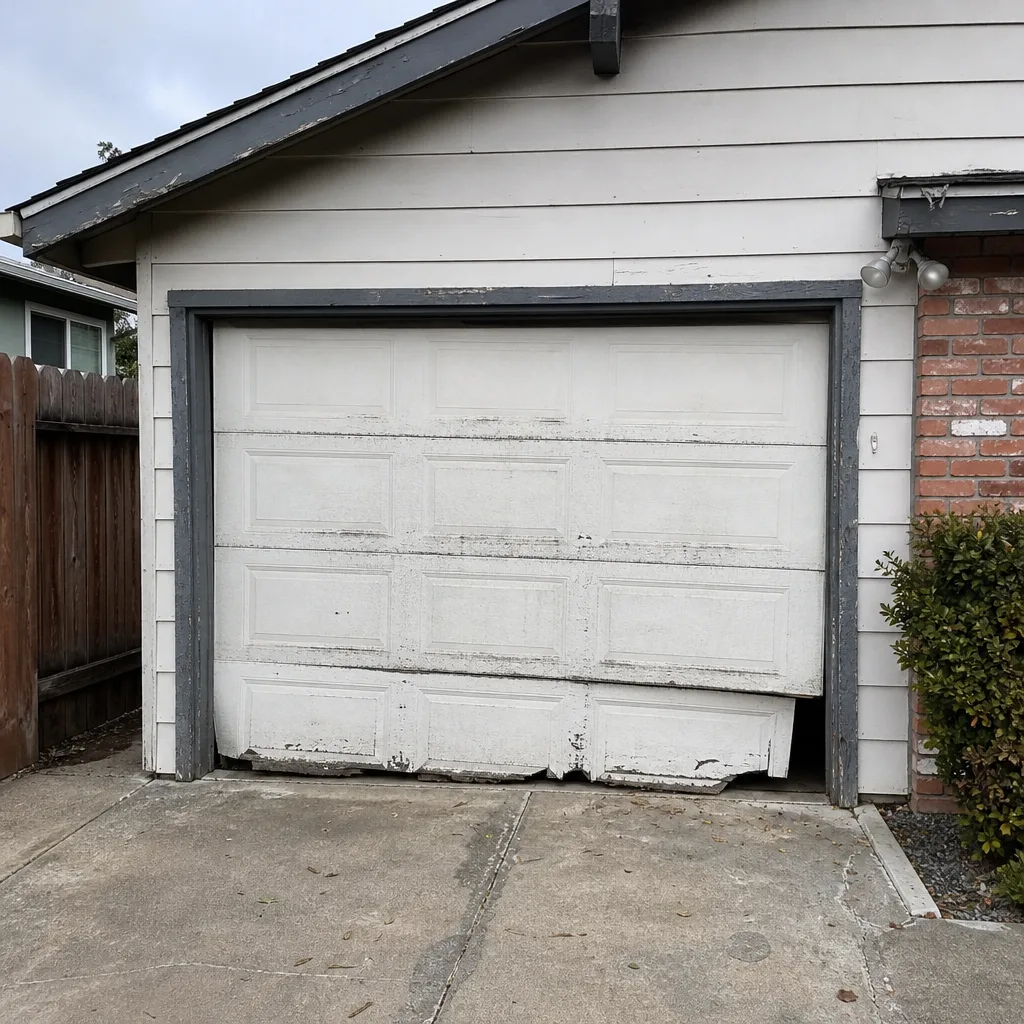 Before
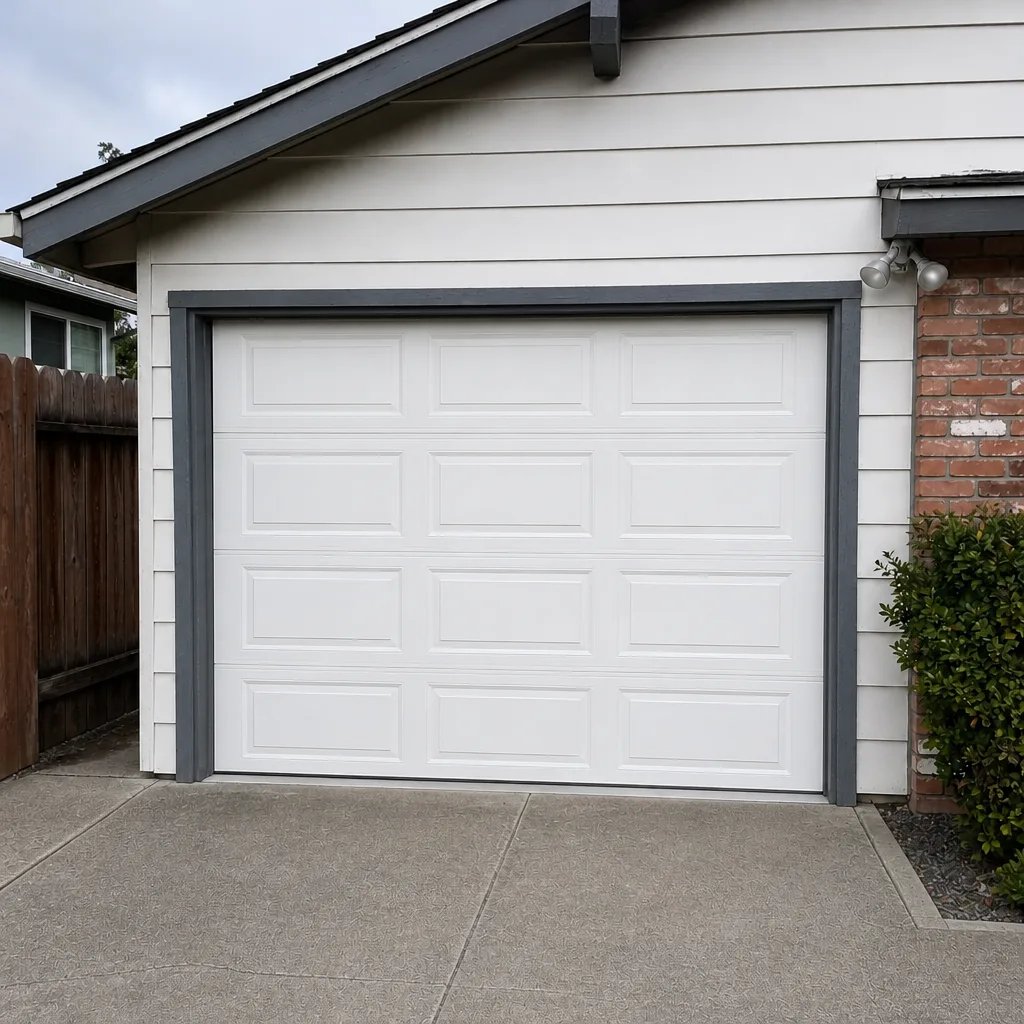 After
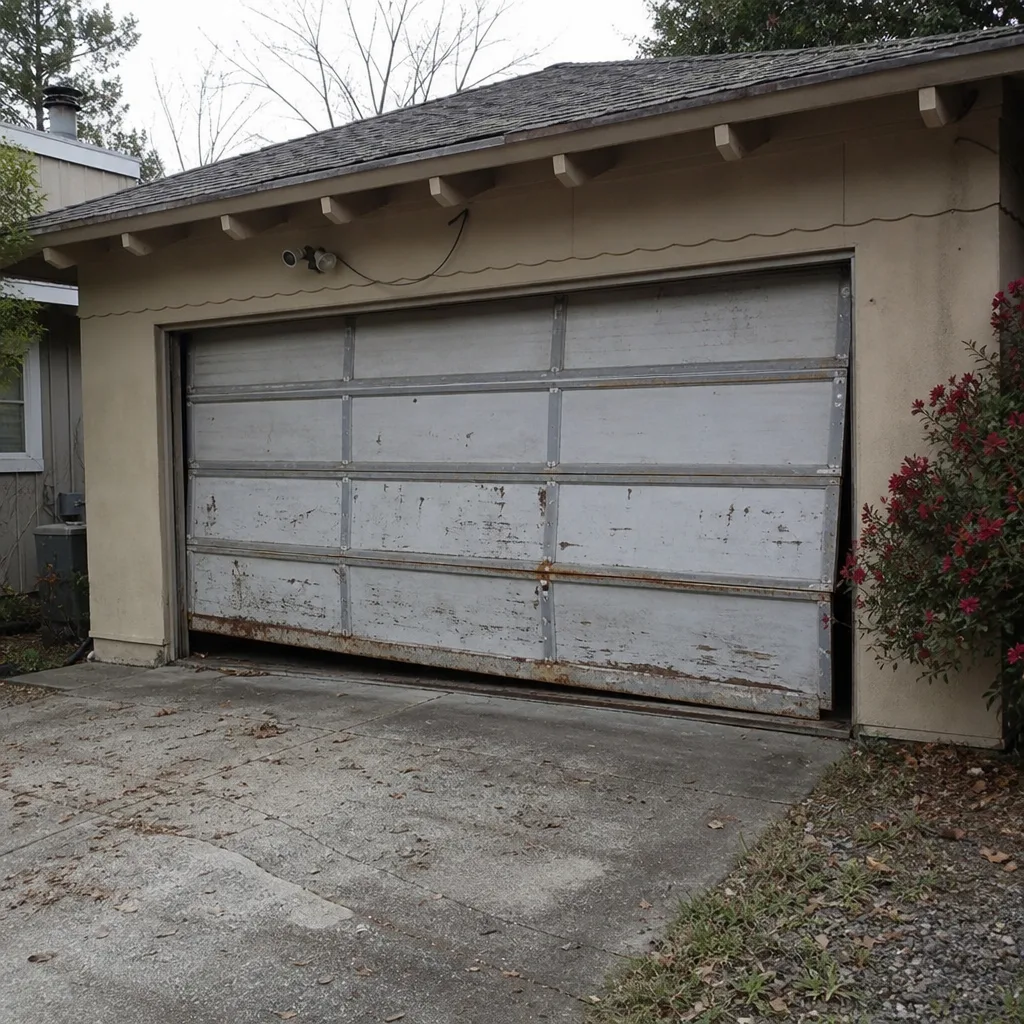 Before
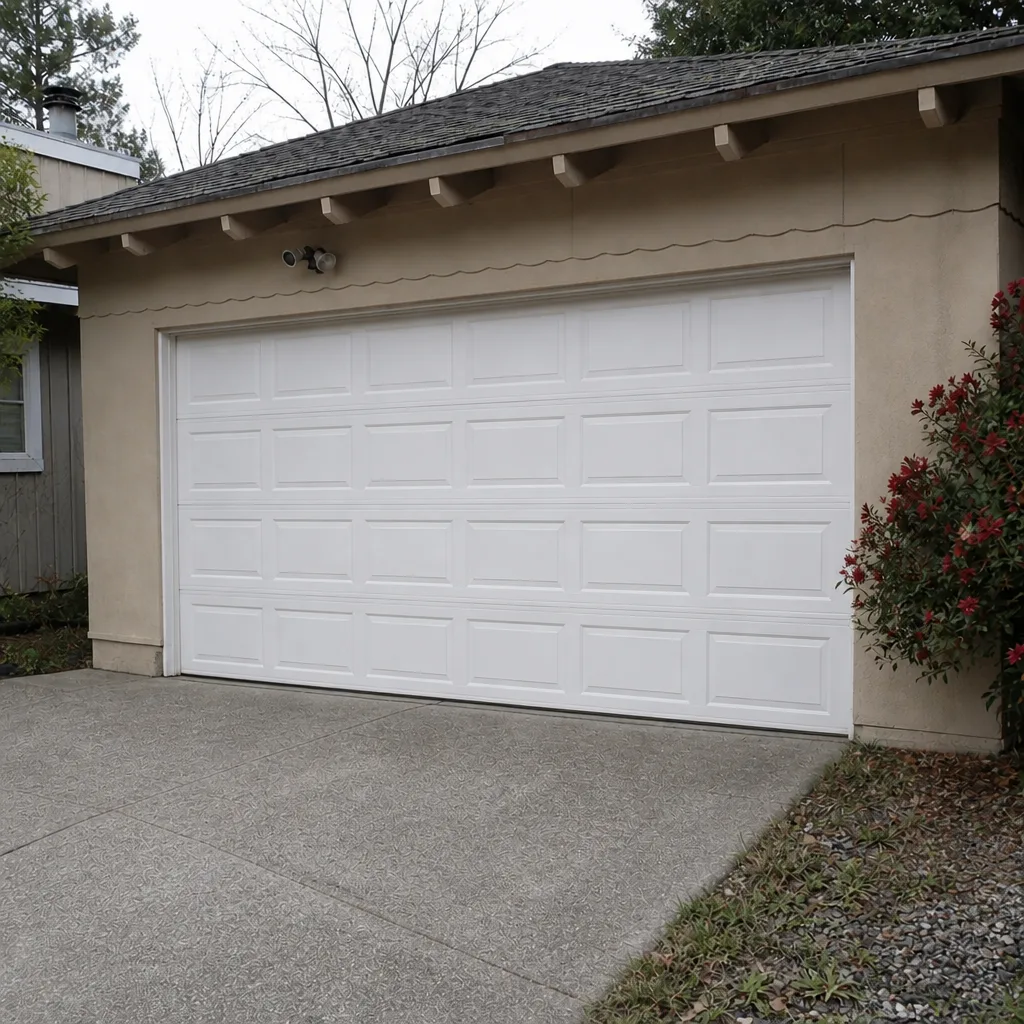 After
When to Call a Professional
Some checks belong in the homeowner’s hands. Others should never be. Call a professional when a spring or cable is broken or hanging, when the door is stuck off-track or won’t close, when a manual release won’t disengage, when the opener runs but the door doesn’t move, or when an electrical component in the opener needs work. Springs and cables are under high tension; opening the opener housing puts you near live wiring. Those are technician jobs. For everything else – testing the manual release, checking weatherstripping, and confirming sensor alignment – you’ve got this. When you need the work done right, our garage door repair team and garage door opener repair specialists diagnose the problem on the first visit, not the second. Signal Garage Door Repair offers free estimates in Santa Rosa – call (844) 834-1851.
Frequently Asked Questions
Pull the red manual release cord hanging from the trolley, then lift the door by hand. If the door is too heavy for you or the cord won’t disengage, you have a real problem – call (844) 834-1851 for emergency repair. We answer 24/7. Fast dispatch from 7am to 7pm, Sunday through Friday.
Typical spring repair ranges from $180 to $340 for one spring, or $360 to $680 for a matched pair. A pair is usually replaced together because both springs are the same age. Call (844) 834-1851 for an exact quote – estimates are free, and the written estimate is the price.
Yes, if you can’t lift the door by hand or the manual release is seized. A battery backup lets the opener run during a Santa Rosa wildfire power shutoff, so you’re not stuck in the garage. LiftMaster, Chamberlain, Genie, and Raynor all offer backup kits matched to specific models.
Start with the bottom seal and threshold – that’s where most of the air exchange happens. Then check the perimeter weatherstripping at the top and sides. Clopay and Amarr publish model-matched replacement seals, and a technician can confirm the fit before installing.
Yes, same-day repair is available for stuck doors and opener failures. Call (844) 834-1851. We answer 24/7, and we dispatch from 7am to 7pm, Sunday through Friday. Closed Saturday; if your door fails on a Saturday, call us and we’ll book you for Sunday.
Yes, we work only with licensed and insured technicians. Our technicians have up to 15 years of experience and diagnose by system knowledge, not guesswork – whether it’s a Chamberlain, Genie, LiftMaster, Craftsman, Clopay, Amarr, Wayne Dalton, or Raynor system.
The Bottom Line
Garage door emergency preparedness for Santa Rosa homes comes down to three habits. Test the manual release at least once a year – a cord you can’t pull is a door you can’t open. Back it up with a battery backup on the opener if the door isn’t easy to lift by hand, especially during fire season. And keep the weatherstripping tight so smoke and embers stay outside. The annual 15-minute drill covers all three and costs nothing. Do it before the season turns, not after the power goes out. If any part of your system needs repair – a stuck door, a failing opener, a worn seal – we’re the specialist you call. For more on Santa Rosa garage door work, our team is ready.
Contact
If anything in this guide sent up a flag – a manual release that won’t pull, an opener without backup, or a bottom seal that’s letting the smoke in – call (844) 834-1851 for a free estimate. We answer 24/7. Fast dispatch from 7am to 7pm, Sunday through Friday. We’ll tell you what’s wrong, what it costs, and what to expect before work begins. Your door, back on signal.
Written by the team at Signal Garage Door Repair.